

When planning an outdoor upgrade, homeowners often hear two terms repeatedly: hardscaping and softscaping. While both are essential parts of landscape design, they serve very different purposes. Understanding the difference helps you make smarter decisions about layout, budget, maintenance, and long-term value.
Whether you are redesigning a backyard, installing a patio, or starting from scratch, knowing how these two elements work together can transform your outdoor space into something functional, beautiful, and sustainable.
What Is Hardscaping?
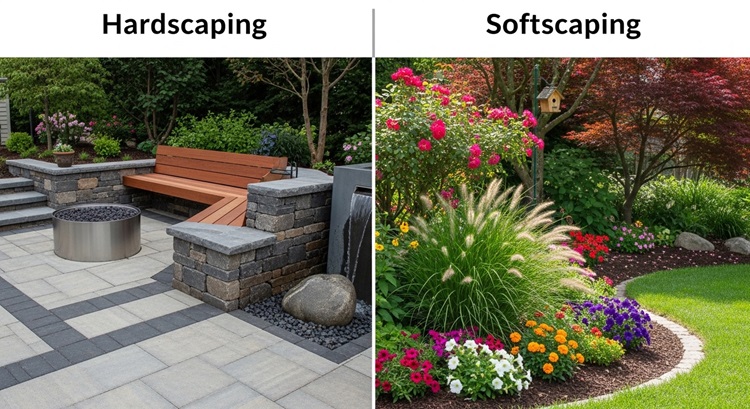
Hardscaping refers to the non-living, structural elements of a landscape. These are the permanent or semi-permanent features made from materials such as stone, concrete, brick, metal, or wood. Hardscaping forms the framework of your outdoor space.
Examples include patios, driveways, walkways, retaining walls, decks, pergolas, fire pits, outdoor kitchens, stone steps, and water features. These components define how people move through and use the space.
Modern hardscape design goes beyond simple concrete slabs. Today’s Hardscaping Companies focus on integrating functionality with aesthetics. Permeable pavers, for example, allow water drainage to reduce runoff. Natural stone patios create a seamless blend with the surrounding environment. Outdoor kitchens and fire features extend living areas, making outdoor spaces usable year-round.
Hardscaping provides structure. It solves practical problems such as drainage issues, soil erosion, uneven terrain, and accessibility. Without it, landscapes can feel undefined or difficult to maintain.
What Is Softscaping?
Softscaping includes the living elements of a landscape. This covers grass, shrubs, trees, flowers, groundcovers, and soil. It also includes organic materials such as mulch and compost that support plant growth.
Softscaping adds life, color, texture, and seasonal interest. It evolves over time as plants grow and change throughout the year. Unlike hardscaping, softscape elements require ongoing care, including watering, pruning, fertilizing, and seasonal replacements.
Today’s landscape trends emphasize sustainability and climate-appropriate planting. Many homeowners are moving toward native plants, drought-tolerant species, and pollinator-friendly gardens. This approach reduces water consumption and long-term maintenance costs while supporting local ecosystems.
Softscaping creates atmosphere. It softens rigid surfaces, provides shade, improves air quality, and enhances privacy. Without it, even the most beautifully built patio can feel cold or incomplete.
How Do Hardscaping and Softscaping Work Together?
Hardscaping and softscaping are not competing elements; they complement each other. A well-designed landscape balances both.
Think of hardscaping as the bones of the design and softscaping as the finishing layer that brings warmth and character. For example, a stone pathway (hardscape) lined with ornamental grasses and flowering plants (softscape) creates visual harmony. A retaining wall can double as a seating area, while shrubs planted around it reduce its visual heaviness.
Professional landscaping services austin texas homeowners rely on often begin with site analysis. Designers assess soil conditions, drainage, sunlight exposure, and how the family intends to use the space. From there, they determine how much of the yard should be dedicated to structure versus greenery.
A yard that is too heavy on hardscape may feel industrial and heat up quickly during warmer months. On the other hand, too much softscape without structural planning can lead to muddy areas, poor drainage, and maintenance challenges.
The key is intentional design.
Which One Is More Important?
Neither is more important than the other. The answer depends on your goals.
If you want low maintenance and defined entertainment areas, hardscaping may take priority. If you prefer lush greenery and a natural atmosphere, softscaping will play a larger role.
For families who enjoy hosting gatherings, features like patios, outdoor kitchens, and seating walls are often essential. For those seeking tranquility and privacy, trees, hedges, and layered plantings might matter more.
Climate also plays a role. In regions with hot summers, strategic tree placement reduces energy costs by shading homes. In areas with heavy rainfall, proper hardscape drainage solutions prevent erosion and water damage.
Most successful projects use a balanced ratio tailored to the homeowner’s lifestyle.
Maintenance Differences Between Hardscaping and Softscaping
One of the biggest differences between the two lies in maintenance.
Hardscaping generally requires less frequent upkeep. Occasional sealing, power washing, and joint repairs may be needed, but these tasks are not constant. High-quality installations by experienced Hardscaping Companies can last for decades with minimal intervention.
Softscaping, however, is ongoing. Lawns need mowing, plants require trimming, and seasonal flowers may need replacement. Irrigation systems must be monitored to ensure efficient watering.
That said, modern landscape practices are shifting toward low-maintenance plant selections and smart irrigation systems. Automated watering, soil moisture sensors, and native planting strategies significantly reduce upkeep compared to traditional turf-heavy yards.
Cost Considerations
Hardscaping typically involves higher upfront costs due to materials and labor. Stonework, concrete installations, and structural features require skilled craftsmanship. However, they add significant property value and longevity.
Softscaping is usually less expensive initially but involves continuous maintenance costs. Plants may need replacement, and lawns can require ongoing care.
When budgeting, it’s important to consider long-term value rather than only installation expenses. A thoughtfully designed outdoor space often increases curb appeal and resale potential.
Design Trends Shaping Modern Landscapes
Outdoor design continues to evolve. Today’s homeowners want more than just a lawn and patio. They seek multifunctional spaces that blend indoor comfort with outdoor living.
Current trends include outdoor offices, eco-friendly materials, edible gardens, and layered lighting integrated into hardscape features. Many landscaping services austin texas residents hire are incorporating smart lighting systems, sustainable drainage solutions, and native plant palettes.
The focus is on durability, sustainability, and comfort. Hardscape materials are being chosen for heat resistance and longevity, while plant selections prioritize resilience and biodiversity.
These trends reflect a growing awareness that landscapes should be both beautiful and environmentally responsible.
How to Decide What Your Yard Needs
Start by asking yourself how you plan to use the space. Do you entertain frequently? Do you want a play area for children? Are you aiming for a peaceful retreat?
Next, evaluate the current condition of your yard. Poor drainage, uneven terrain, or erosion may require structural solutions before planting begins.
Consulting professionals can provide clarity. Experienced designers understand how to blend hard and soft elements seamlessly while keeping maintenance realistic.
Ultimately, the best landscapes feel cohesive. They guide movement naturally, offer comfortable gathering areas, and showcase greenery in a way that enhances, rather than overwhelms, the structure.
Frequently Asked Questions
What is the main difference between hardscaping and softscaping?
Hardscaping includes the non-living structural elements like patios, walkways, and retaining walls, while softscaping consists of living components such as grass, plants, trees, and flowers. Hardscaping provides structure, and softscaping adds life and color.
Is hardscaping more expensive than softscaping?
Hardscaping often has higher upfront installation costs due to materials and labor. Softscaping is usually less expensive initially but may involve ongoing maintenance and replacement costs over time.
Can I have a landscape without hardscaping?
While it’s possible, most functional outdoor spaces benefit from some hardscape features. Without pathways or patios, landscapes can lack accessibility and structure, making them harder to maintain.
How do I maintain a balance between hardscape and softscape?
A professional landscape design plan helps ensure balance. Combining structural elements with thoughtfully placed plants creates harmony and improves usability. The right ratio depends on your lifestyle and climate.
Do Hardscaping Companies also handle planting?
Many Hardscaping Companies collaborate with landscape designers or offer complete landscaping packages that include both structural installations and planting. It’s best to confirm the full scope of services before starting a project.
A well-planned outdoor space blends the strength of hardscaping with the vitality of softscaping. When designed thoughtfully, the two elements work together to create a landscape that is functional, inviting, and built to last.