

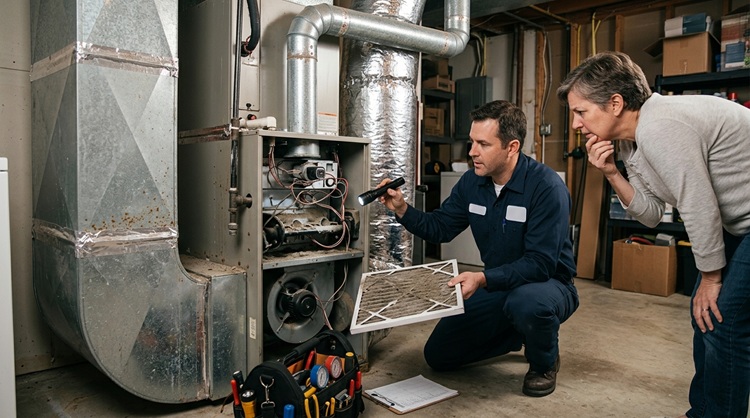
A ducted gas heater can work reliably for years, which makes it easy to overlook small changes in its performance. A little more noise, slower warm-up times or a room that never quite reaches temperature may seem harmless at first. Leave those issues unchecked and the system can become less efficient, less comfortable and more expensive to repair.
The important distinction is how the heat gets around the home. Ducted gas heating warms air at a central unit and moves it through ceiling or floor ducts. It is not the same as a hydronic boiler that circulates hot water through pipes and radiators. The maintenance checklist should reflect that difference.
Skipping the regular service
The most familiar mistake is waiting until the heater stops. If it starts on a cold morning and warm air reaches the rooms, it is tempting to assume that everything is fine. Yet dust, worn components and small combustion problems can develop without an obvious breakdown.
In a ducted gas unit, the burner, ignition system, fan, heat exchanger and safety controls all have a part to play. A qualified technician can clean and inspect the appropriate components, measure combustion performance, check the gas supply against the appliance specification and test for carbon monoxide. The flue and ventilation arrangements also need attention.
Schedule servicing according to the manufacturer’s instructions and the conditions of use. Annual checks are a sensible routine for many Canberra households, particularly where the heater works hard over winter; the provider’s own recommendation and any warranty conditions should also be checked. Do not assume that every model has the same interval.
Keep the invoice or service report rather than relying on memory. A record of previous findings makes it easier to recognise a recurring issue, and maintenance history can be useful if a warranty question arises.
Late summer or early autumn is a practical time to book. There is less pressure to restore heating immediately, and any parts that need replacing can be identified before the first prolonged cold spell.
Ignoring noises, poor starts and short cycling
A heating system has its own normal sounds. The fan starts, the burner ignites and air moves through the ductwork. Changes to that pattern deserve attention, especially if they continue after the system has settled into its normal cycle.
Squealing, grinding or repeated rattling can indicate a fan, motor or mounting problem. A new vibration may also come from loose ductwork. The sound alone cannot identify the fault, but it is a useful clue to report when booking a service.
Watch for repeated ignition attempts, a heater that runs briefly and then shuts down, or a unit that switches on and off more often than usual. This behaviour is often called short cycling. Causes can include airflow restrictions, thermostat problems or faults detected by the heater’s controls.
Do not keep resetting a unit that repeatedly locks out. Safety systems are designed to stop operation when something is wrong. Forcing repeated restarts can delay the diagnosis of a problem that needs professional attention.
The same applies when rooms take noticeably longer to warm up. Check that the thermostat settings have not changed and that return-air grilles are clear, but leave internal gas and electrical components alone. A technician can determine whether the cause sits in the controls, fan, burner or duct network.
A prompt inspection may involve a straightforward adjustment or replacement of a worn part. Waiting for a complete failure risks losing heat when technicians are busiest and may allow a smaller fault to affect other components.
Using thermostats and zones without understanding the system
Not every cool room indicates a faulty heater. Ducted systems depend on a thermostat, and some include zones that open or close airflow to selected areas. Incorrect settings can make a working unit appear unreliable.
Start with the basics: check the operating mode, target temperature and programmed times. After a power interruption, some controllers may need their settings checked. If a room is colder than expected, make sure its zone is selected and that furniture or rugs are not covering an outlet.
Trying to heat the house faster by setting the thermostat much higher is unlikely to solve a fault. In many systems it simply asks the heater to keep running until the higher temperature is reached. A steady, comfortable setting is usually more useful than frequent large changes.
Zoning deserves particular care. Closing too many outlets or altering dampers without guidance can reduce airflow below the level the heater is designed to handle. Some systems need a minimum number of zones open, while others manage airflow automatically. Follow the instructions for the particular model.
If one zone is repeatedly too hot or too cold, note which rooms are affected and when the issue occurs. A service technician can check the controller, sensors, dampers and duct balance rather than treating it as a simple thermostat problem.
Overlooking damaged ducts and insulation
A well-maintained central heater still cannot distribute warmth efficiently through torn or poorly connected ducts. Heated air can escape into a roof space or under the floor before reaching the intended room, leaving the heater running longer than necessary.
Flexible ducts may sag, become crushed or separate at a joint. Insulation around them can also deteriorate. The signs are often indirect: one room remains cold, airflow is weaker at a particular outlet, or the heater runs for longer despite no obvious change in the weather.
Air leakage can also make the temperature feel uneven. The thermostat might be satisfied in one part of the house while a distant bedroom remains chilly. Turning the temperature up does not repair the lost airflow; it can increase running costs without fixing the underlying fault.
Look for obvious problems at accessible grilles and outlets, but do not crawl into confined roof spaces or disturb gas equipment to investigate. Duct repairs and balancing are best left to a suitably qualified technician with safe access and the right equipment.
Ask for the supply ducts, return path, connections and insulation to be checked if heating has become uneven. An inspection can establish whether the problem is a damaged duct, a zone damper, poor airflow or an issue with the central unit itself.
Starving the heater of airflow
The return-air path is just as important as the warm-air outlets. The heater draws air back from the home, warms it and sends it through the ducts again. When the return grille or filter becomes blocked, the fan has to work against an unnecessary restriction.
Dust gathers on filters, while curtains, boxes and furniture can obstruct grilles. Restricted airflow can reduce comfort and contribute to overheating or safety shut-downs. The solution is not to remove a required filter and leave it out; it is to clean or replace it in the way the manufacturer specifies.
Filter intervals vary by model and household conditions. Some manufacturer manuals call for checks as often as every fortnight during the heating season. Homes with pets or unusually dusty conditions may need more attention. Confirm whether the filter is washable before cleaning it, and allow a washed filter to dry completely before refitting.
Clean the accessible grille surfaces and keep both returns and supply outlets unobstructed. Avoid closing vents simply to save energy unless the system is designed and configured for that approach.
Service descriptions can be confusing when a property owner is comparing gas heating equipment. Someone searching for Boiler Maintenance Canberra may actually need a ducted gas heater serviced rather than a water-based boiler. When booking, identify the type of system and ask whether the visit covers the burner, heat exchanger, carbon monoxide testing, fan and airflow path.
Forgetting the flue, ventilation and outdoor clearances
Not all maintenance problems are hidden inside the heater. An external unit may have leaves, weeds or stored items crowding it. An indoor unit needs the ventilation and access specified by its manufacturer. Either way, poor clearances can interfere with operation and make safe servicing more difficult.
Keep the area around the unit clear without removing panels or altering any gas connections. Check from ground level that accessible external openings are not buried behind garden growth or household clutter. If a flue terminal looks damaged, loose or obstructed, arrange an inspection rather than attempting to repair it yourself.
Some high-efficiency appliances also have condensate drainage arrangements. These vary by model, so do not assume that every ducted gas heater has the same pipework as a condensing boiler. Where drainage is fitted, ask the technician to check it for blockage, damage and correct discharge.
Flues and ventilation are safety equipment, not optional extras. A heater may still produce warm air while a combustion or exhaust problem develops. That is why a proper service should assess more than the temperature coming from an outlet.
Cutting corners on gas work and safety checks
The costliest shortcut is treating gas work as a do-it-yourself task. Burner adjustments, gas valves, flue repairs and internal safety tests require the right training, equipment and authorisation. In the ACT, use an appropriately licensed or authorised gas appliance worker or gasfitter for the work involved.
The ACT Government’s gasfitter guidance explains the inspection and testing responsibilities associated with gas appliance work. Before authorising a repair, ask what tests will be performed and request a record of the findings.
Carbon monoxide is especially important because it is poisonous, colourless and odourless. It is not the same as the natural gas supplied to a home, which is normally given a noticeable smell to help reveal leaks. Faulty combustion, damaged flues or inadequate ventilation can create a dangerous situation without an obvious warning.
Energy Safe Victoria’s advice on using gas safely identifies blocked burners, fans and airways, failed safety controls and carbon monoxide spillage as reasons for regular servicing. Although that guidance comes from Victoria, the underlying safety concerns apply to ducted gas heaters elsewhere in Australia too.
Where carbon monoxide alarms are used, choose suitable devices, install and maintain them in accordance with the manufacturer’s instructions, and never treat an alarm as a substitute for servicing. If anyone develops unexplained headache, dizziness or nausea while the heater is operating, switch it off if safe, move to fresh air and seek urgent medical advice. If a gas or carbon monoxide emergency is suspected, leave the area and contact the appropriate emergency service.
A maintenance log makes follow-up easier. Record service dates, model details, fault codes, recurring room-temperature problems and any parts replaced. If a technician returns later, that history can help them see what has changed rather than starting from scratch.
Give winter no easy opening
Reliable ducted gas heating is not just a matter of having a working burner. It also depends on clean filters, free-flowing ducts, sensible controller settings, sound ventilation and regular professional checks. Small changes are worth noticing before they become a mid-winter breakdown.
Keep accessible grilles clear, follow the appliance manual, and book qualified help when the heater behaves differently. Those simple habits give the system a better chance of delivering steady warmth without avoidable repair bills.